
Uncategorized
How to Use Investment Performance Tracking Tools Effectively
Seeing a portfolio go up or down is only part of the story. Effective investment performance tracking means understanding what is driving returns, where risks are building, and whether your process is delivering the results your strategy is designed to produce.
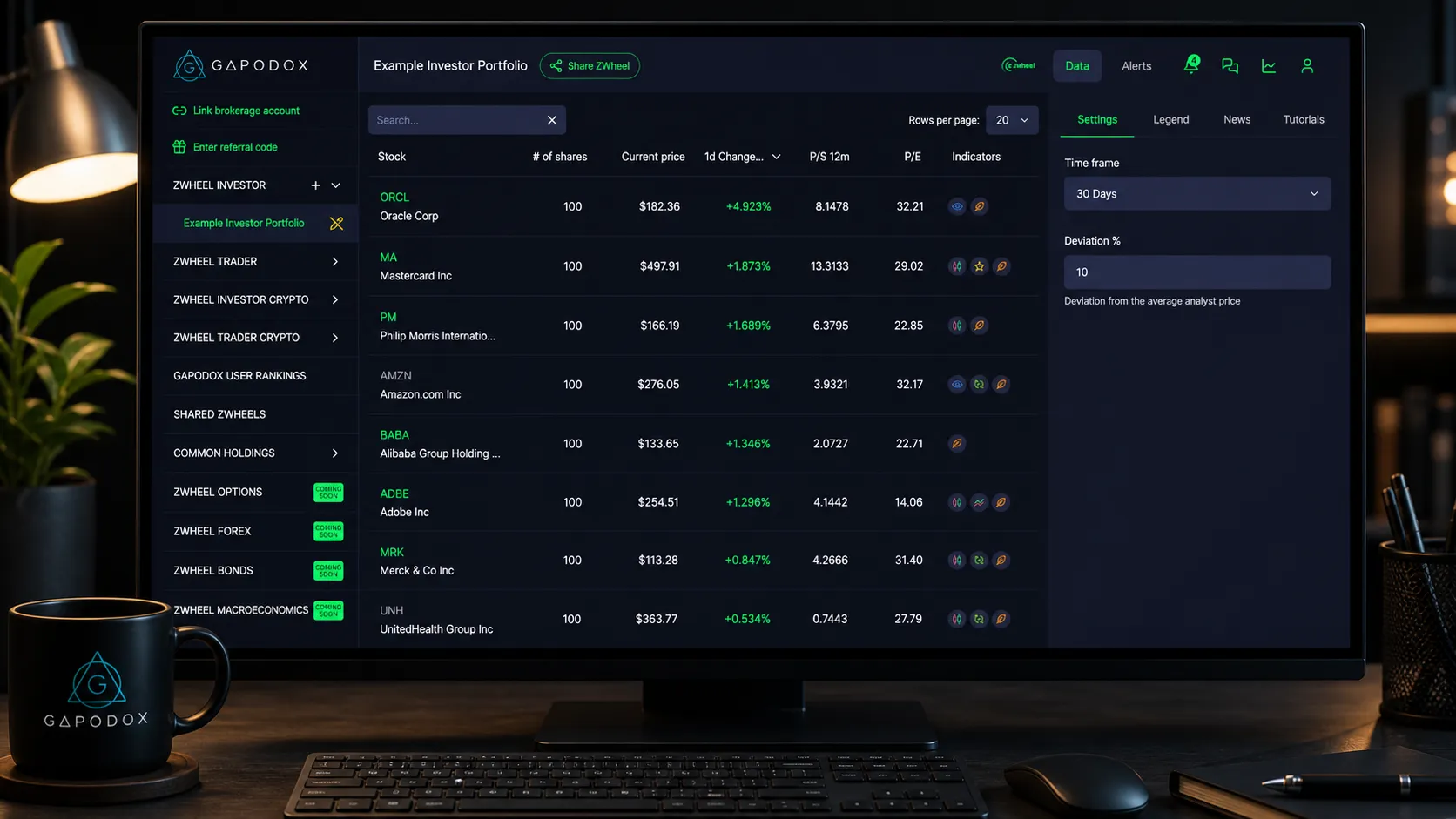
Gapodox supports investment performance tracking by combining portfolio monitoring with institutional data and fundamental analysis, so you always know why your portfolio is performing the way it is.
What does investment performance tracking actually measure?
At its core, performance tracking measures returns — absolute and risk-adjusted — against benchmarks and your own objectives. The best tools also measure attribution, helping you understand which positions, sectors, or factors are responsible for the bulk of gains and losses.
Why is attribution analysis important in performance tracking?
Without attribution analysis, you may not realize that a strong year came from one lucky position rather than a repeatable process. Attribution helps you separate skill from luck, identify your edge, and improve your investment process over time by understanding which decisions actually added value.
What role does institutional data play in performance tracking?
- Validates whether your best performers were supported by institutional conviction
- Helps identify whether underperformers had institutional buying or selling pressure
- Surfaces whether insider activity aligned with your position changes
- Provides context for sector rotation affecting your holdings
How does Gapodox support investment performance tracking?
Gapodox lets you monitor your watchlist alongside the institutional and insider activity surrounding each position. When a holding outperforms, you can quickly check whether hedge funds were accumulating the same stock. When a position underperforms, you can see whether institutional investors were reducing exposure before the move happened.
What habits improve investment performance tracking over time?
Review your decisions against outcomes regularly, not just your returns. Document the thesis behind each position and check it against subsequent institutional and insider data. Tracking the quality of your process, not just the results, is what separates investors who improve from those who repeat the same mistakes.